
Bilaminar Membrane Hydrophones for Diagnostic Ultrasound Acoustic Measurements
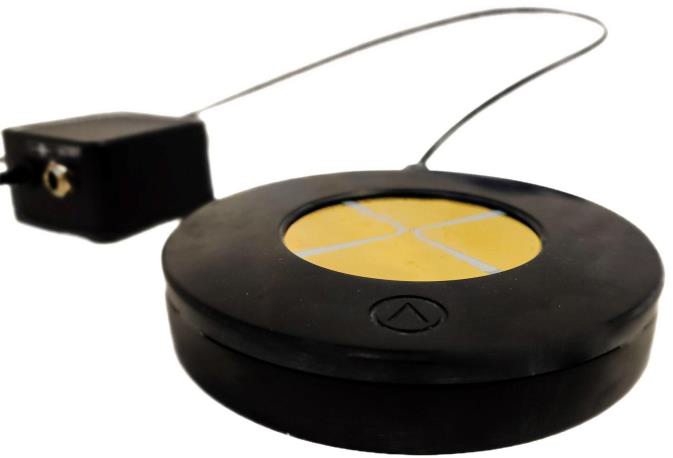
Bilaminar Membrane Hydrophones for Diagnostic Ultrasound Acoustic Measurements
Bilaminar membrane hydrophones provide wideband, low-aperture, high-linearity acoustic sensing for diagnostic ultrasound measurements — ideal for free-field characterization, output power estimation, and IEC-conformant testing workflows.
What it is
A bilaminar membrane hydrophone uses a thin, tensioned polymer film with conductive layers to transduce acoustic pressure into voltage. Compared with needle/PVDF probes, the membrane’s small effective aperture and broad frequency response reduce spatial-averaging error in field mapping and pulse measurements.
Where it’s used
- Acoustic output characterization and field mapping
- Type-testing and production QA for probes/systems
- Commissioning and verification against site physics programs
- Coupled use with scanning tanks, motion controllers, and your AMS.
Advantages at a glance
Wideband response suitable for modern imaging pulse spectra
Small effective aperture → improved spatial resolution in field scans
Planar geometry → stable mounting and consistent angular response
Traceable calibration with uncertainty statement (ISO/IEC 17025)
Standards alignment
These hydrophones fit into methods defined in IEC 62127-1/-2 for free-field characterization and IEC 60601-2-37 acceptance testing for diagnostic ultrasound systems (essential performance and acoustic output).
| Model |
Effective aperture (mm) |
Frequency range (−3 dB) |
Sensitivity (mV/Pa) |
Max pressure (MPa) |
Calibration uncertainty (k=2) |
|
Actual #s to come |
Deliverables
- Hydrophone + pre-mounted frame or ring
- Cable and BNC adapter
- Factory calibration sheet (traceable), recommended scan step sizes, correction notes
- Optional: in-tank validation and AMS integration guide
FAQs
When should I choose a membrane hydrophone instead of a needle hydrophone?
Use membrane hydrophones for wideband pulse measurements and high-resolution field mapping where small effective aperture and reduced spatial averaging are critical.
How do you address spatial-averaging error and effective aperture?
Bilaminar membranes have a small effective aperture and uniform response, minimizing spatial-averaging error in high-frequency or focused fields, which is essential for accurate pulse and pressure measurements.
What calibration is provided and how often is re-calibration recommended?
Each unit ships with a traceable calibration and uncertainty statement. Annual re-calibration is recommended to maintain measurement confidence in compliance workflows.
Which IEC tests can I support with this sensor?
It supports IEC 62127-1/-2 free-field characterization and IEC 60601-2-37 acoustic output and essential performance testing for diagnostic ultrasound systems.
Inquiry & Quote
Interested in booking a calibration / verification?
Complete the form, and our sales engineering team will respond with scheduling options and documentation.
1950 Lefthand Creek Lane, Longmont, CO 80501
+1 303.834.8413